1
Behavioral evaluations
How should we evaluate agent behavior beyond pure task success? We are exploring comprehensive behavioral test suites alongside causal or mechanistic explanations to understand exactly why agents behave as they do.
Advancing the scientific study of how AI agents do and should behave.


.svg)
The dominant paradigm in AI agent research is heavily capability-centric. Agents are primarily evaluated on what they achieve, and progress is measured by rigidly closing the gap between observed and desired performance. Though this has undoubtedly driven remarkable advances, it represents an incomplete account of agency that completely sidesteps a critical question: how do agents achieve what they achieve? A system that achieves a goal through opaque, brittle, or socially harmful processes raises deep concerns that traditional test metrics simply do not capture.
We propose a workshop centered on this complementary question, which we refer to as the study of agent behavior. This encompasses the full range of both observable and latent processes governing an agent's actions, including its decision-making strategies, its interaction patterns, its internal representations, and its responses to interventions.
How should we evaluate agent behavior beyond pure task success? We are exploring comprehensive behavioral test suites alongside causal or mechanistic explanations to understand exactly why agents behave as they do.
Covering rigorous studies of behavior generation, social simulation, and complex multi-agent dynamics where agentic behavior is inherently relational and interactive.
Focusing on highly actionable methods like post-training, environment design, and structural constraints needed to reliably steer agents toward strictly desired behaviors.
How do behavioral properties intersect with accountability? We investigate how to make this entire behavioral perspective deeply actionable for both policymakers and deployment practitioners.
Developing the fundamental architectures and underlying models intrinsically designed to capture, generate, or simulate diverse AI behaviors.
However, we strongly welcome any submission that advances the understanding of AI agents through a behavioral lens, including bold work that bridges or directly challenges these established categories.
We are excited to welcome leaders in this space from across disciplines like behavioral economics, human-AI interaction, computing, and policy.
Friday, October 9
Pacific Time
Keynote
Natasha Jaques
Keynote
Sophia Kazinnik
Keynote
Diyi Yang
Keynote
Kawin Ethayarajh
Keynote
Colin Camerer
Alphabetical by title
Xun Liu, Yi Evie Zhang, Vira Kasprova, Parisa Rabbani, Pardis Sadat Zahraei, Tianyu Zhang, Ali Ebrahimpour-Boroojeny, Varun Chandrasekaran
University of Illinois Urbana-Champaign
Spotlight
Verona Teo1, Raghav Jain2, Tobias Gerstenberg1, Max Kleiman-Weiner3,4,5
1Stanford University2University of California, San Diego3Google4University of Washington5Common Sense Machines
Chengrui Qu, Yizhou Zhang, Nicolas Lanzetti, Eric Mazumdar
California Institute of Technology
Meng Chen1, Anya Ji1, Tsung-Han Wu1, Tobias Maringgele2,1, David M. Chan3,1, Alane Suhr1, Amy Pavel1
1University of California, Berkeley2Technical University of Munich3University of California, Irvine
Sara Fish1, Julia Shephard1, Minkai Li1, Ran I Shorrer2, Yannai A. Gonczarowski1
1Harvard University2Pennsylvania State University
Yaowen Ye1, Jacob Steinhardt2,1
1University of California, Berkeley2Transluce
Xun Liu, Yi Evie Zhang, Vira Kasprova, Parisa Rabbani, Pardis Sadat Zahraei, Tianyu Zhang, Ali Ebrahimpour-Boroojeny, Varun Chandrasekaran
University of Illinois Urbana-Champaign
Tony O'Halloran
Andromede AI
Zixiang Xu1, linna yu2, miao xie2
1University of Southern California2Yuvous
Lai Jiang1, Cheng Qian1, Zhenhailong Wang1, Pan Lu2, Heng Ji1, Hao Peng1
1University of Illinois Urbana-Champaign2Stanford University
We invite contributions that advance the scientific study of agent behavior across a wide range of topics and methodologies. We plan to announce acceptances by July 24th at the latest.
All submissions should be made via OpenReview.
Submission deadline
June 23, 2026 (AoE)
June 30, 2026 (AoE)
Submissions close in
We solicit non-archival papers (4–9 pages long) formatted in the standard COLM template.
Submissions undergo double-blind peer review. Preprints and concurrent submissions are explicitly encouraged.
We seek proposals for new benchmarks to evaluate frontier AI agent behavior. Submissions should use this LaTeX template, and be 1-2 pages long. The template also contains more information about the expected format and content.
NOTE: this track is for benchmark proposals only (no implementation or results needed at this stage).
If selected, we will provide credits for running benchmarks, a harness for building the benchmarks, and support the creators in implementing an open-source version.
We invite creators of accepted benchmarks to collaborate towards a large-scale agent behavior evaluation suite and paper.
🏆 We plan to give one Best Paper Award along with several oral presentation slots.

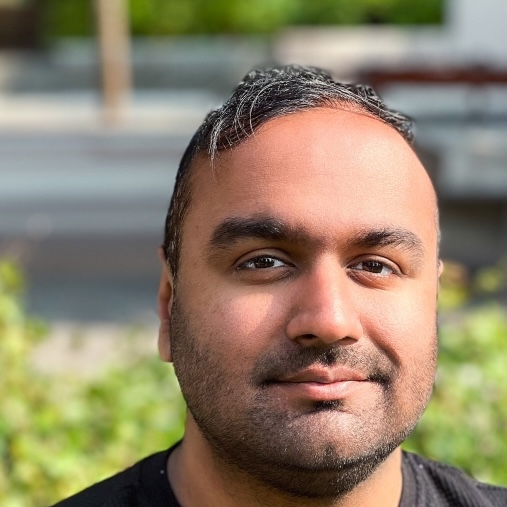
Co-lead organizer
MIT
Website
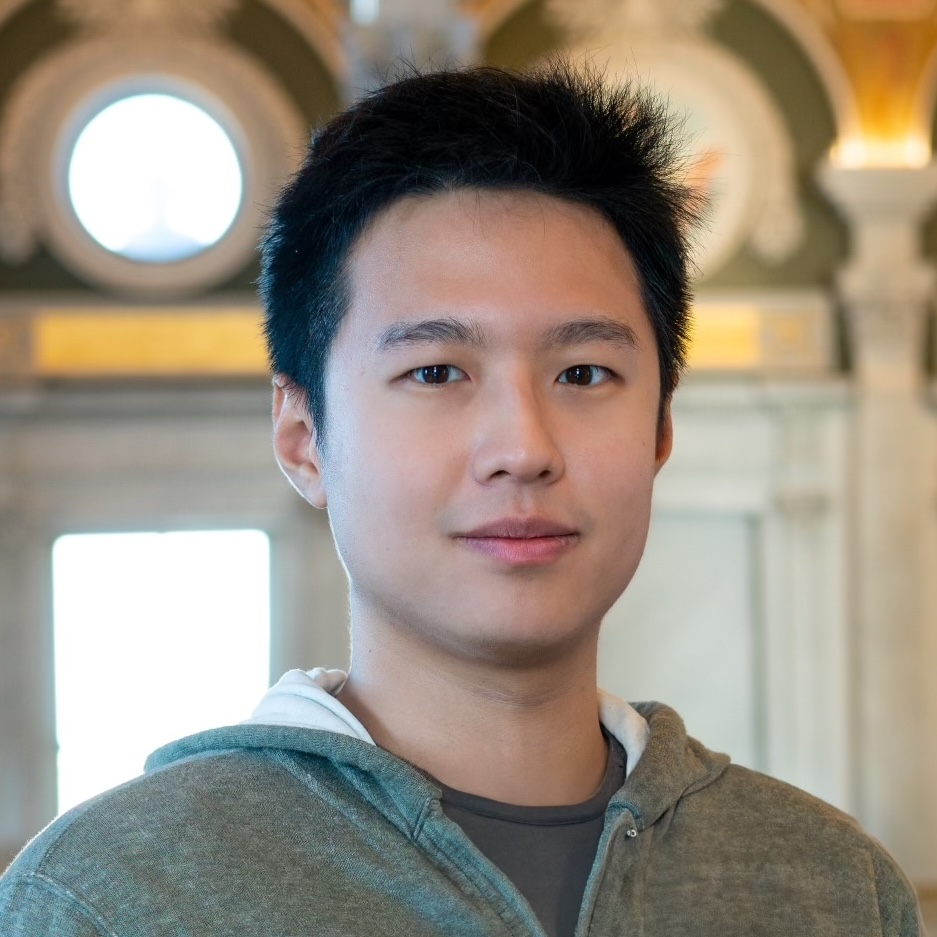
Co-lead organizer
Dartmouth College
Website
Stanford University
Website

Georgia Institute of Technology
Website

UC Berkeley
Website

MIT
Website

ETH Zürich
Website

Amazon
Website

Amazon
Website

MIT
Website
For questions regarding the workshop, submissions, or participation, please contact the organizers at: